Enterprise
IT Infrastructure
Overview
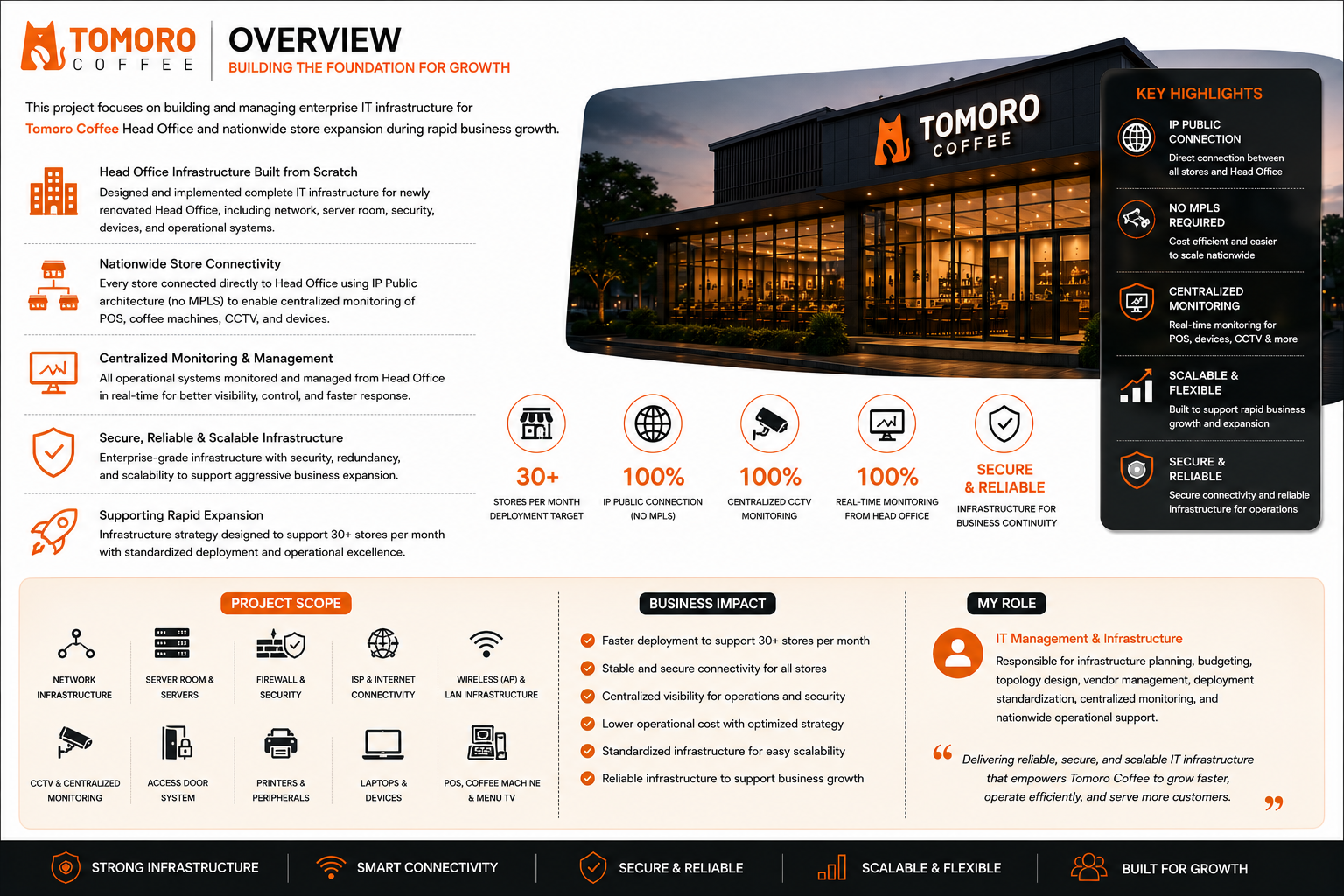
This project focused on building and managing enterprise IT Infrastructure for Tomoro Coffee Head Office and nationwide store expansion operations during rapid business growth.
At the time of implementation, the Head Office was still under renovation, requiring complete infrastructure planning from scratch based on operational business requirements and long-term scalability.
Responsibilities included designing enterprise network topology, server room architecture, firewall implementation, ISP connectivity, wireless infrastructure, CCTV monitoring systems, access door systems, POS infrastructure, and centralized operational connectivity between Head Office and all stores.
Every store was connected directly to Head Office using IP Public connectivity without MPLS, allowing centralized monitoring for POS systems, coffee machines, CCTV systems, network devices, and operational infrastructure.
The business expansion target reached more than 30 stores per month, requiring standardized infrastructure deployment, scalable operational processes, and efficient nationwide implementation strategies.
As IT Management & Infrastructure, responsibilities included infrastructure planning, budgeting, vendor selection, deployment standardization, centralized monitoring architecture, network topology design, store operational readiness, and nationwide infrastructure coordination.
Role
IT Management & Infrastructure
Project Type
Enterprise Infrastructure Deployment
Client
Tomoro Coffee
Infrastructure & Business Challenge
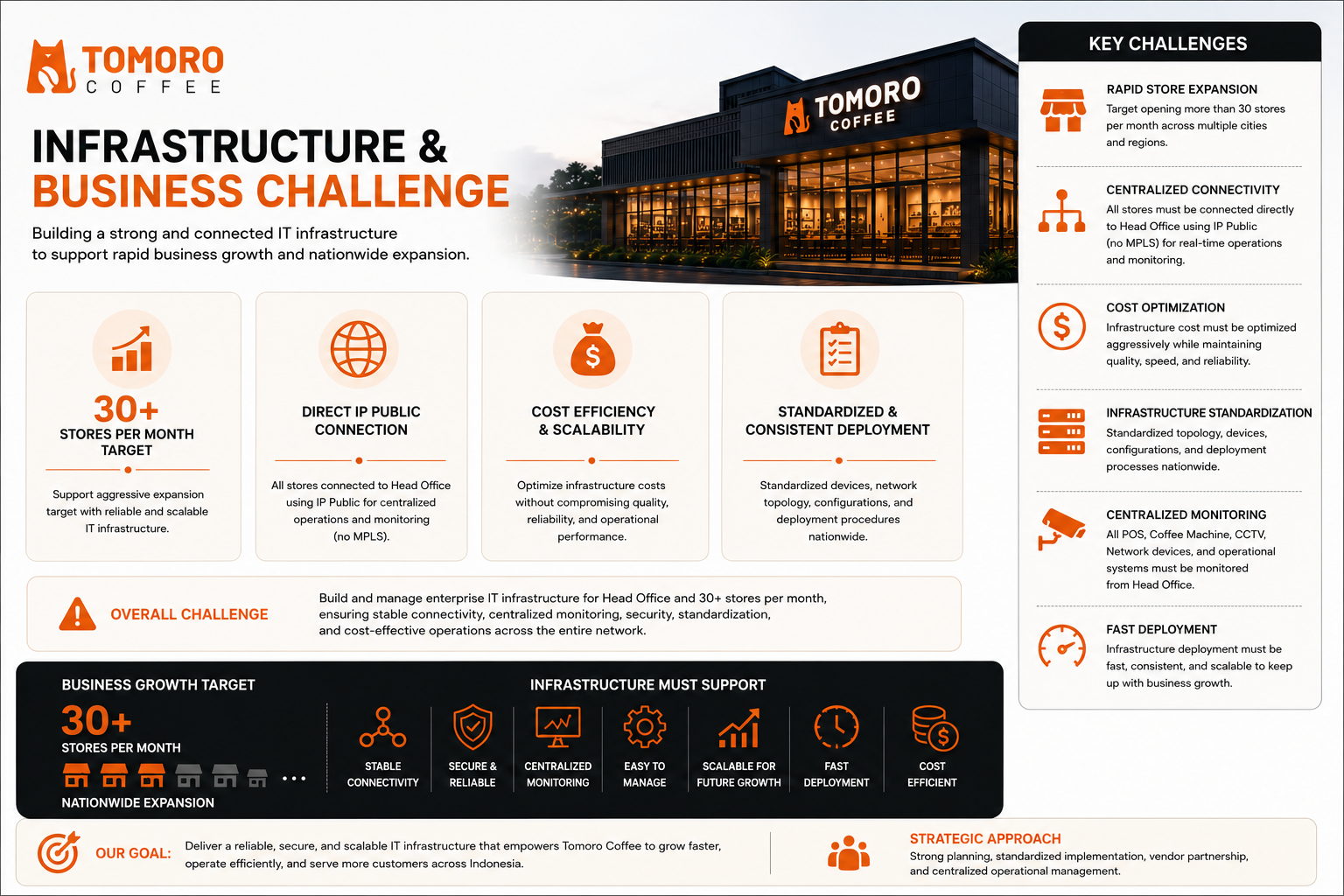
One of the biggest challenges during implementation was supporting rapid business expansion while maintaining stable, scalable, and cost-efficient infrastructure operations.
The company targeted opening more than 30 stores per month, requiring fast deployment processes, infrastructure standardization, centralized monitoring, and operational consistency across all locations.
Since infrastructure costs needed to be optimized aggressively, strategic planning was required to balance operational scalability, nationwide support availability, and long-term infrastructure reliability.
Rapid Store Expansion
Supporting aggressive business expansion with deployment targets exceeding 30 stores per month.
Centralized Connectivity
Building secure direct connectivity between Head Office and all stores using IP Public architecture.
Cost Optimization
Reducing operational costs while maintaining deployment speed and infrastructure reliability.
Infrastructure Standardization
Standardizing topology, devices, operational workflows, and deployment procedures nationwide.
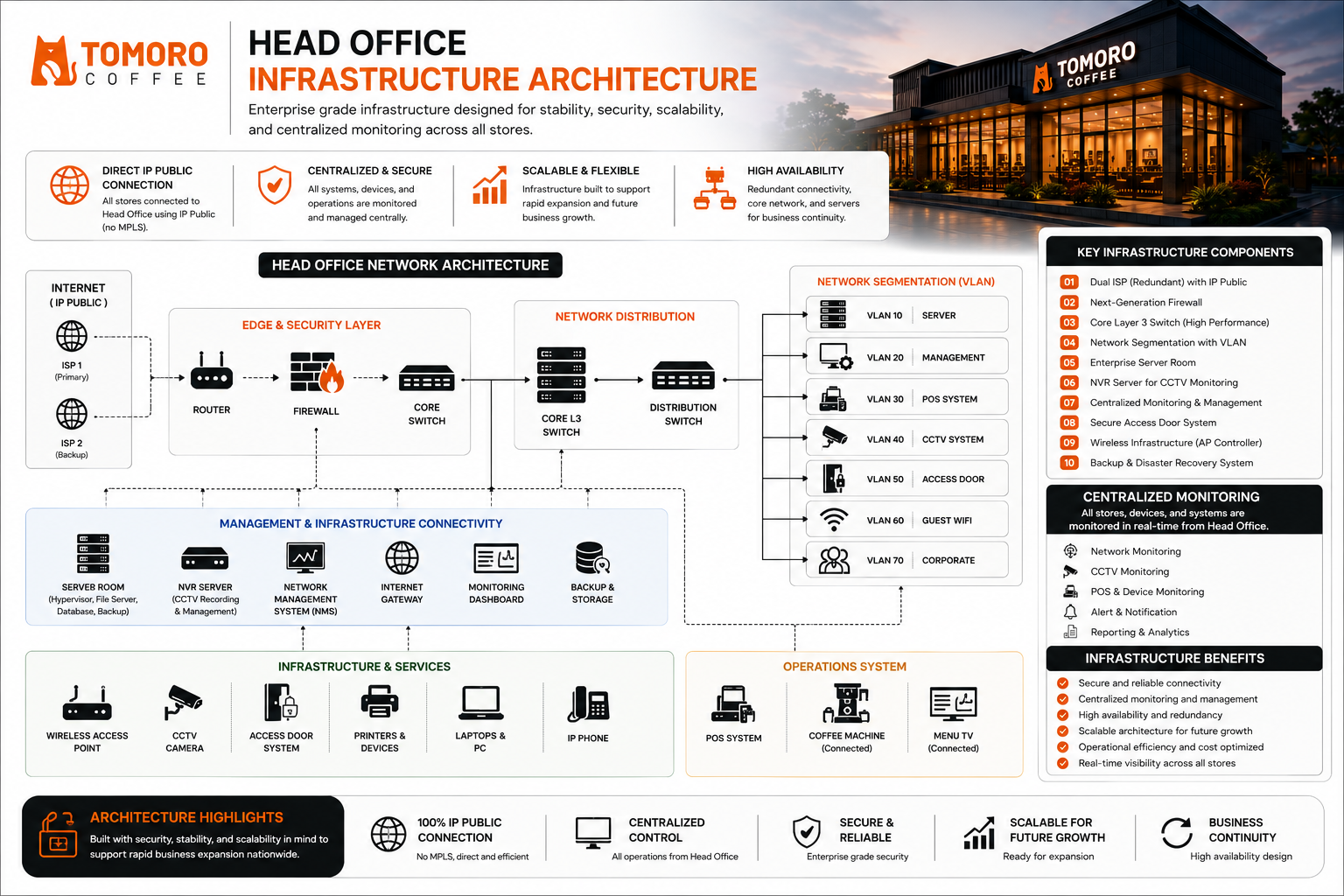
Head Office Infrastructure Architecture
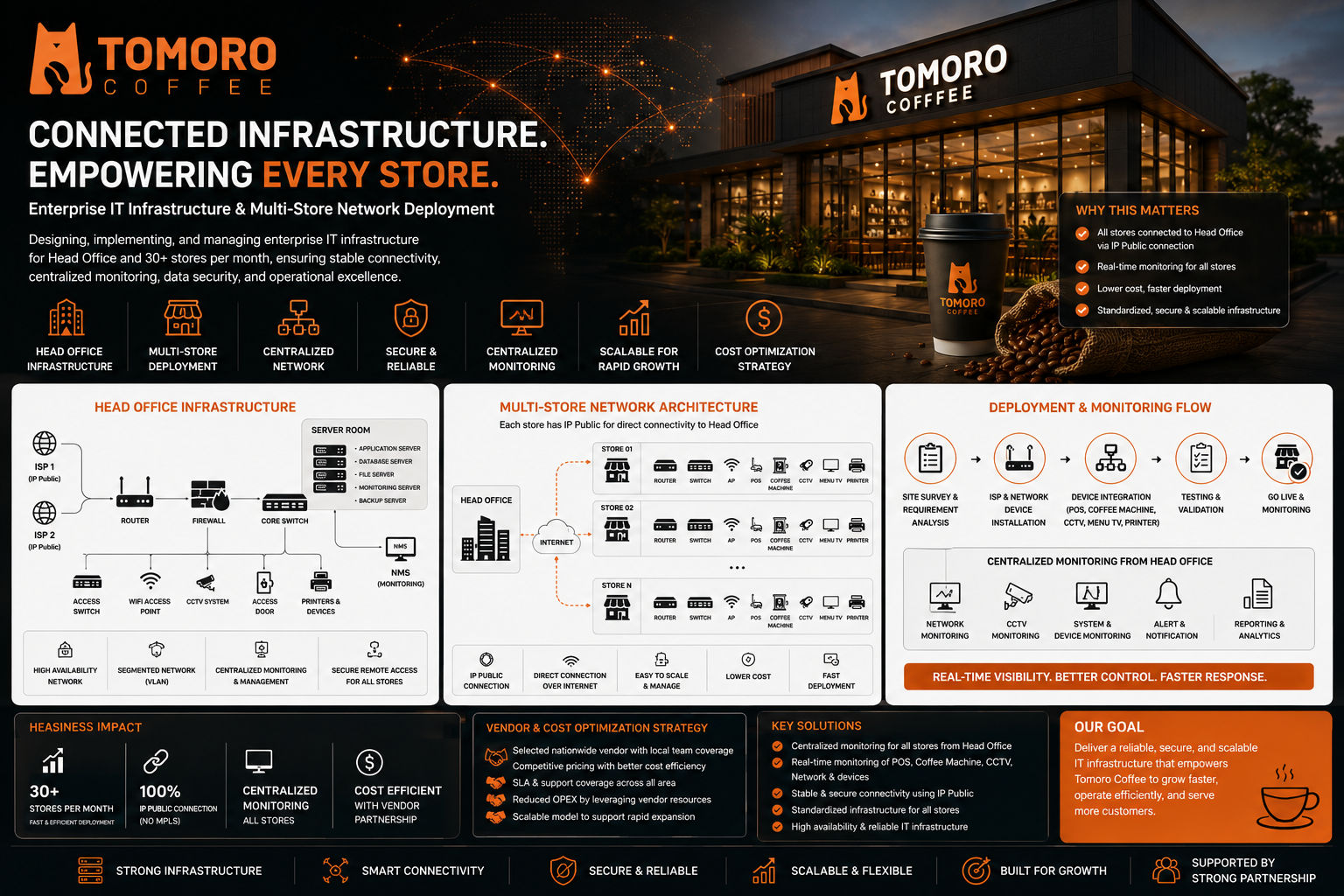
Enterprise infrastructure architecture was designed to support centralized monitoring, operational scalability, secure connectivity, and stable communication between Head Office and all stores nationwide.
The infrastructure included server room implementation, firewall systems, ISP redundancy, centralized monitoring systems, wireless infrastructure, CCTV systems, access door systems, and enterprise network segmentation.
Server Room Infrastructure
Designing centralized server room architecture to support operational services and monitoring systems.
Firewall & Security
Implementing secure network access, firewall policies, and enterprise infrastructure protection.
Wireless Infrastructure
Building enterprise wireless infrastructure for operational connectivity and centralized management.
CCTV Monitoring
Centralized CCTV monitoring systems allowing Head Office visibility across all stores.
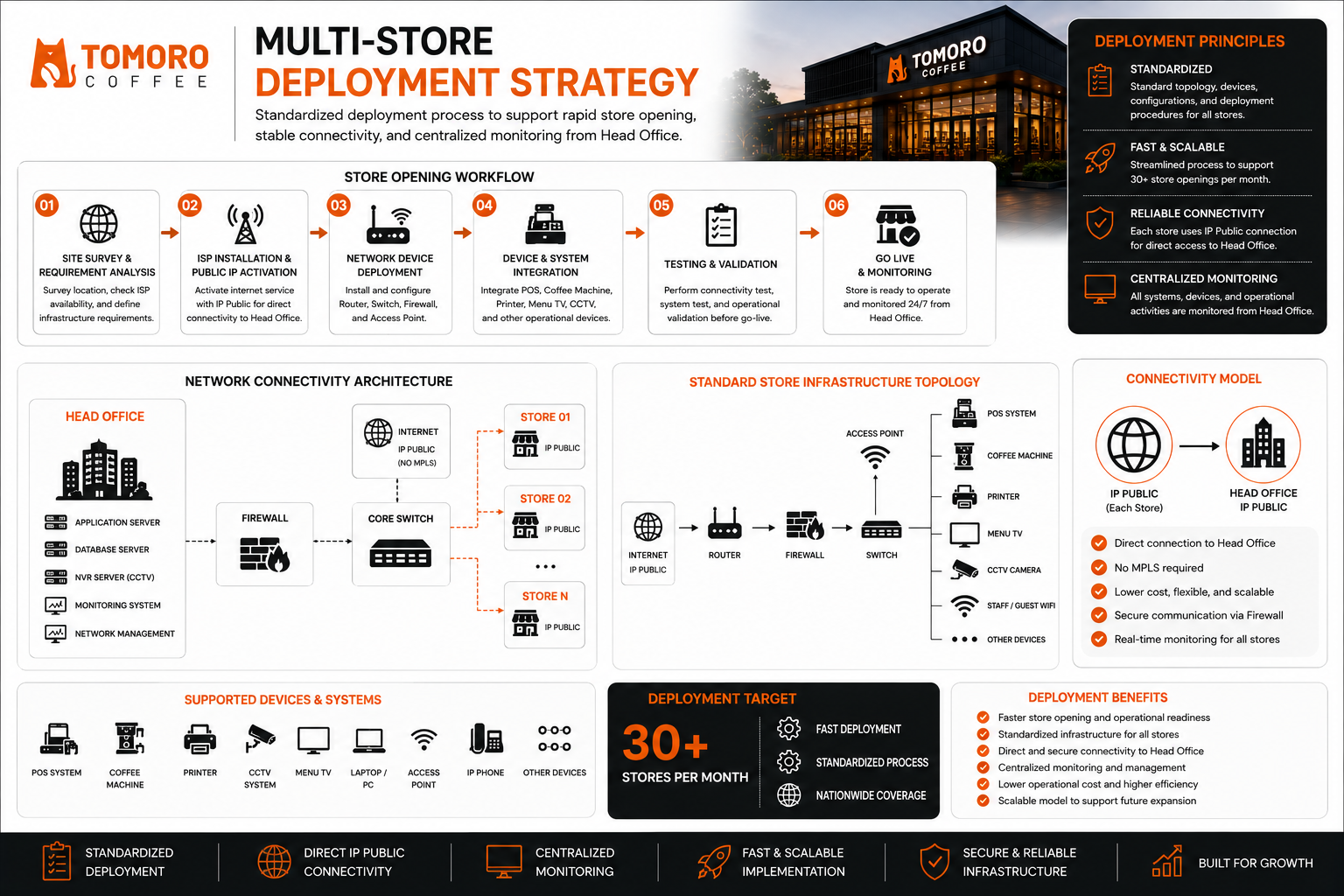
Multi-Store Deployment Strategy
Standardized deployment workflows were implemented to support fast, scalable, and operationally consistent store opening processes nationwide.
Every new store followed standardized infrastructure topology, operational configuration, device installation procedures, and validation workflows.
ISP & Public IP
Every store utilized Public IP connectivity for direct secure communication with Head Office infrastructure.
Network Device Deployment
Standardized deployment for routers, switches, access points, and store connectivity devices.
POS & Device Integration
Integrating POS systems, coffee machines, printers, menu TV, and CCTV systems into centralized infrastructure.
Testing & Validation
Performing operational testing, connectivity validation, and infrastructure readiness verification before go-live.
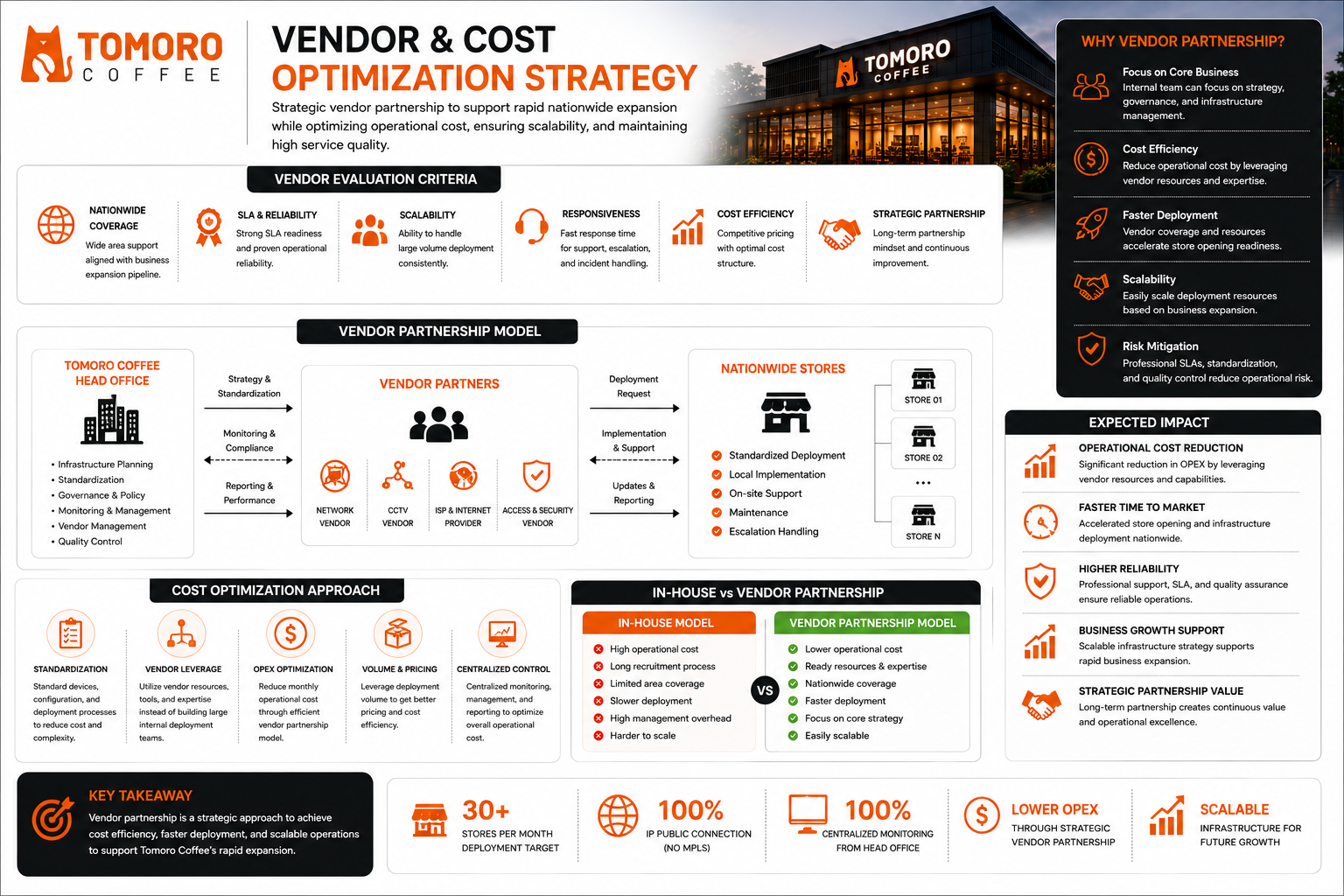
Vendor & Cost Optimization Strategy
To support aggressive nationwide expansion while maintaining operational efficiency, vendor partnership strategies were implemented instead of building large internal deployment teams.
Vendors were selected based on nationwide support coverage, SLA readiness, deployment scalability, operational responsiveness, and long-term partnership capabilities.
Nationwide Vendor Coverage
Vendors were selected based on area support readiness aligned with business expansion pipelines.
OPEX Optimization
Vendor partnership models significantly reduced operational staffing costs and infrastructure deployment expenses.
Fast Deployment
Vendor operational support accelerated store opening readiness and deployment consistency nationwide.
Strategic Partnership
Long-term operational partnerships improved deployment scalability, support responsiveness, and infrastructure governance.
Solutions
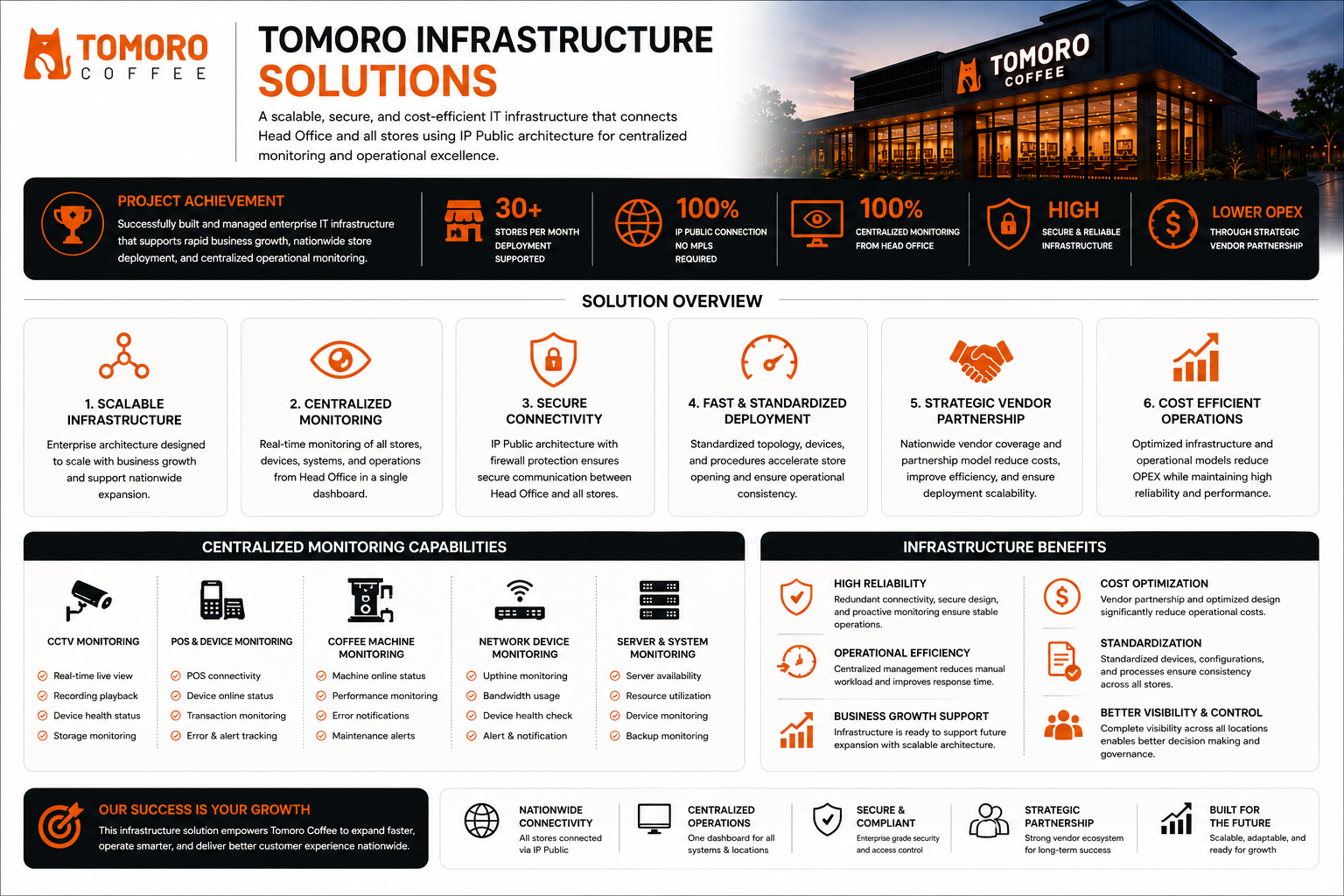
The enterprise infrastructure implementation successfully supported rapid business growth, nationwide store deployment, centralized monitoring, and scalable operational connectivity.
Head Office and all stores were connected using Public IP architecture, allowing secure centralized monitoring without MPLS infrastructure dependency.
Standardized deployment strategies, vendor partnerships, and centralized operational governance significantly improved scalability, deployment speed, operational consistency, and cost efficiency.
Rapid Expansion Support
Infrastructure models successfully supported aggressive business expansion nationwide.
Centralized Monitoring
Head Office could monitor all store infrastructure, devices, and CCTV systems centrally.
Cost Efficient Operations
Vendor partnership strategies reduced operational costs while maintaining deployment quality.
Scalable Infrastructure
Enterprise infrastructure architecture was scalable, secure, and operationally reliable.