Enterprise Antivirus Migration
Overview
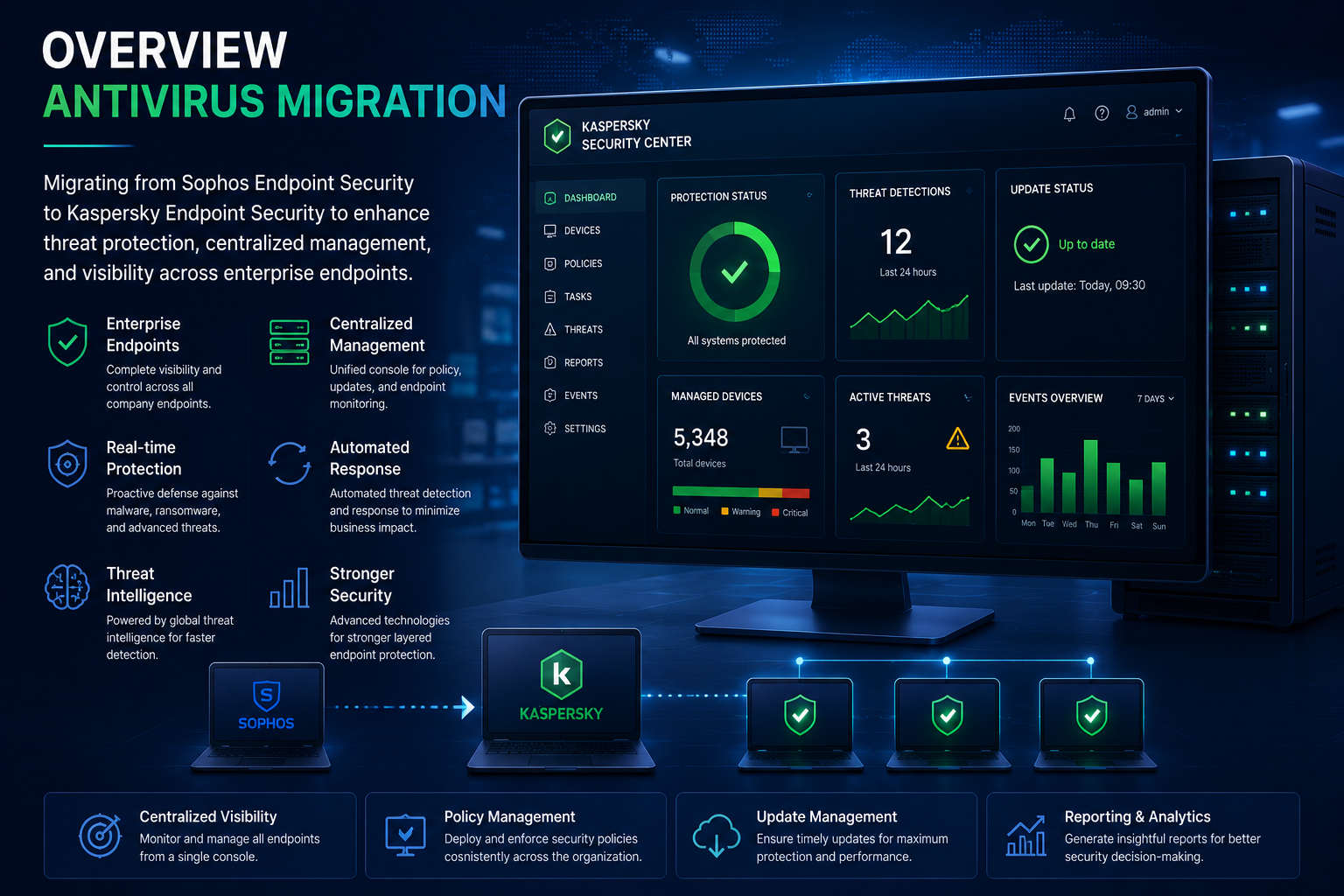
This project focused on migrating enterprise endpoint protection infrastructure from Sophos Endpoint Security to Kaspersky Endpoint Security within PT Bank BTPN Syariah Tbk to improve centralized security management, endpoint visibility, and malware protection capabilities.
The migration included antivirus agent replacement, endpoint policy deployment, centralized management configuration, update distribution validation, and enterprise security policy standardization across corporate environments.
Migration activities were executed gradually using staged deployment methodology to minimize endpoint disruption, avoid antivirus conflicts, and maintain operational continuity throughout migration execution.
Key responsibilities included endpoint validation, antivirus health monitoring, policy synchronization, deployment troubleshooting, update verification, and post-migration operational testing.
Role
System Administrator
Project Type
Enterprise Antivirus Migration
Client
PT Bank BTPN Syariah Tbk
Project Challenge
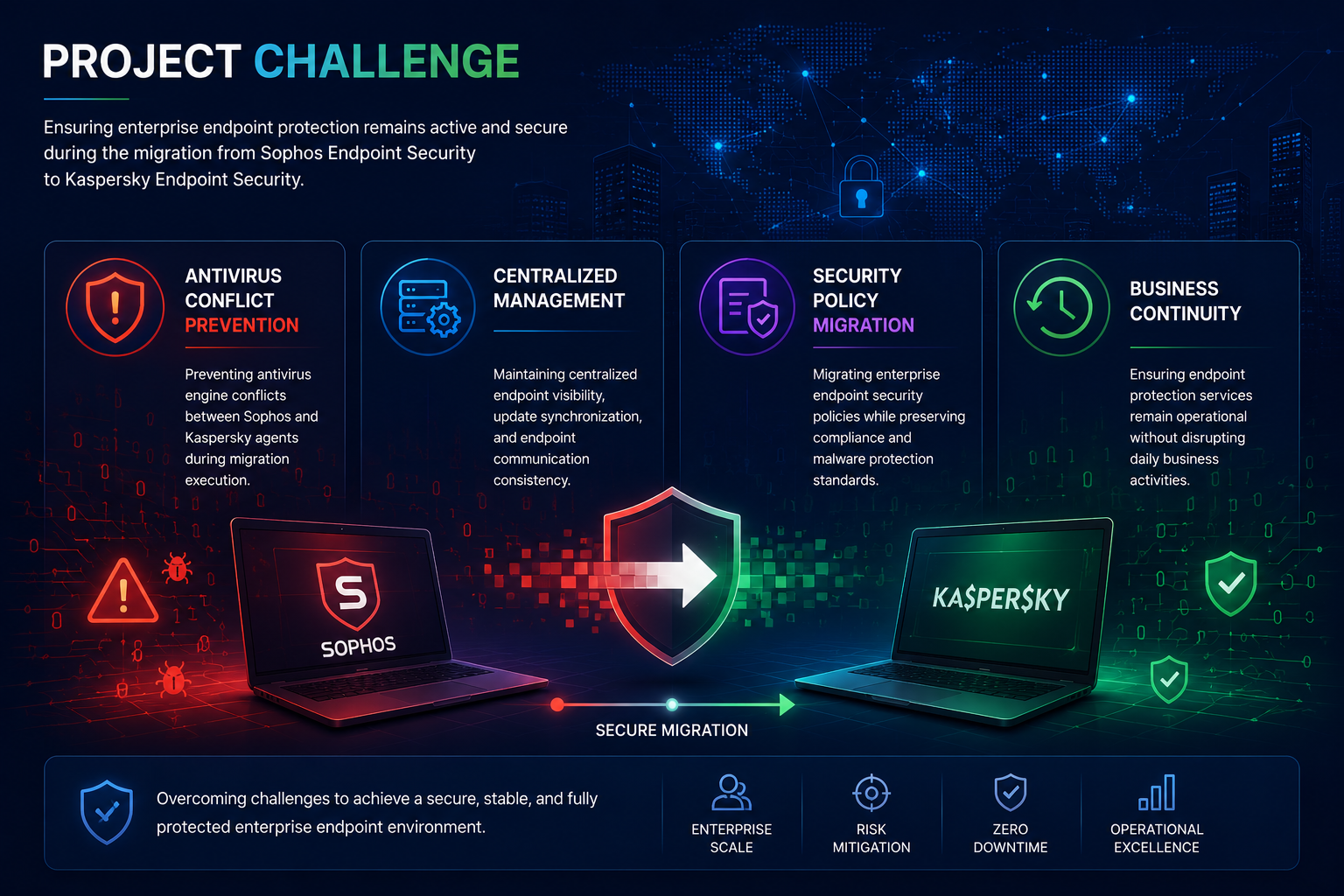
One of the primary challenges during migration was ensuring enterprise endpoint protection remained active throughout the transition from Sophos Endpoint Security to Kaspersky Endpoint Security.
Since the environment supported enterprise-scale operations, maintaining endpoint stability, policy consistency, malware protection, and centralized monitoring became major priorities during migration activities.
Antivirus Conflict Prevention
Preventing antivirus engine conflicts between Sophos and Kaspersky agents during migration execution.
Centralized Management
Maintaining centralized endpoint visibility, update synchronization, and endpoint communication consistency.
Security Policy Migration
Migrating enterprise endpoint security policies while preserving compliance and malware protection standards.
Business Continuity
Ensuring endpoint protection services remained operational without disrupting daily business activities.
Infrastructure Migration
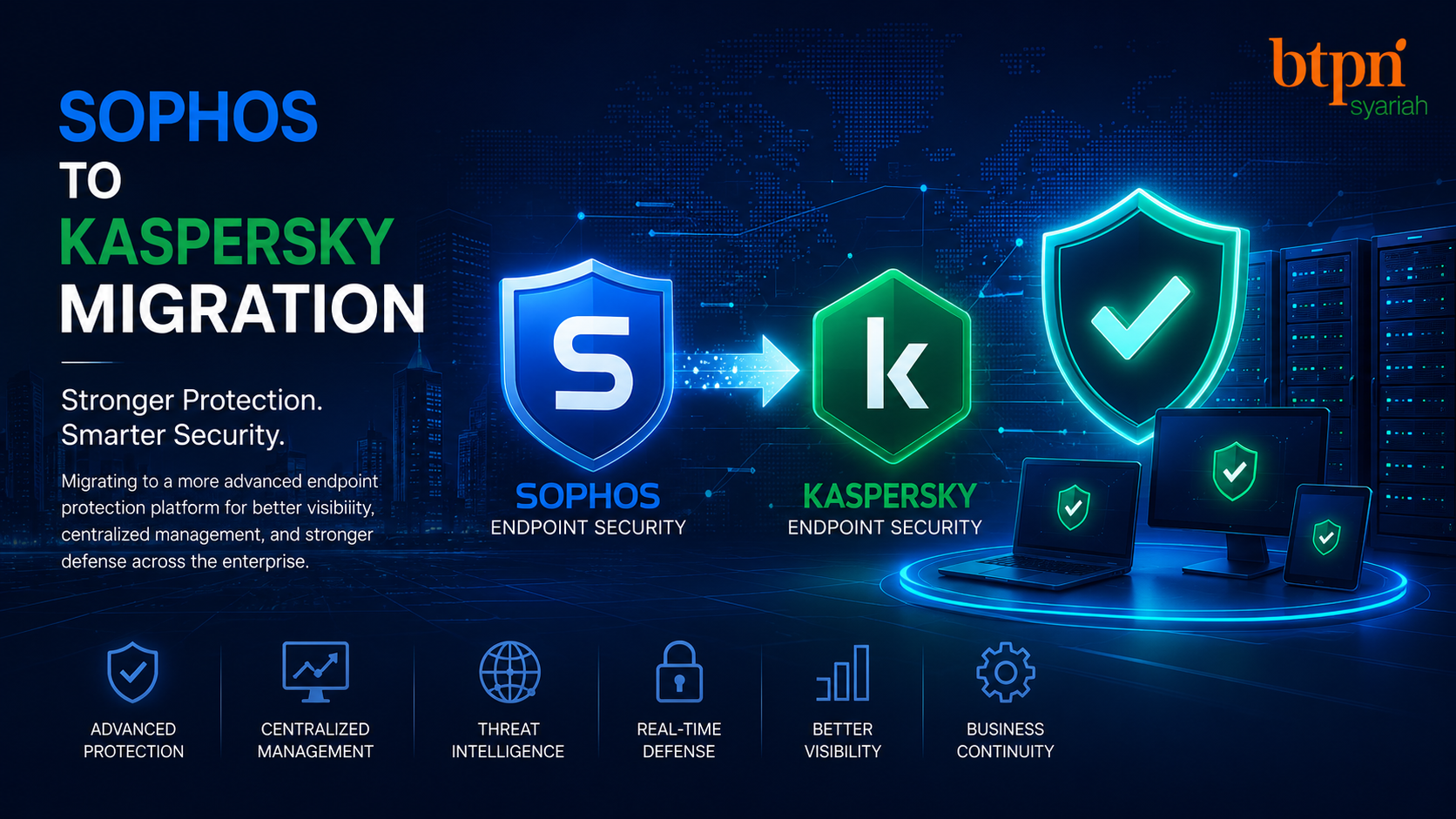
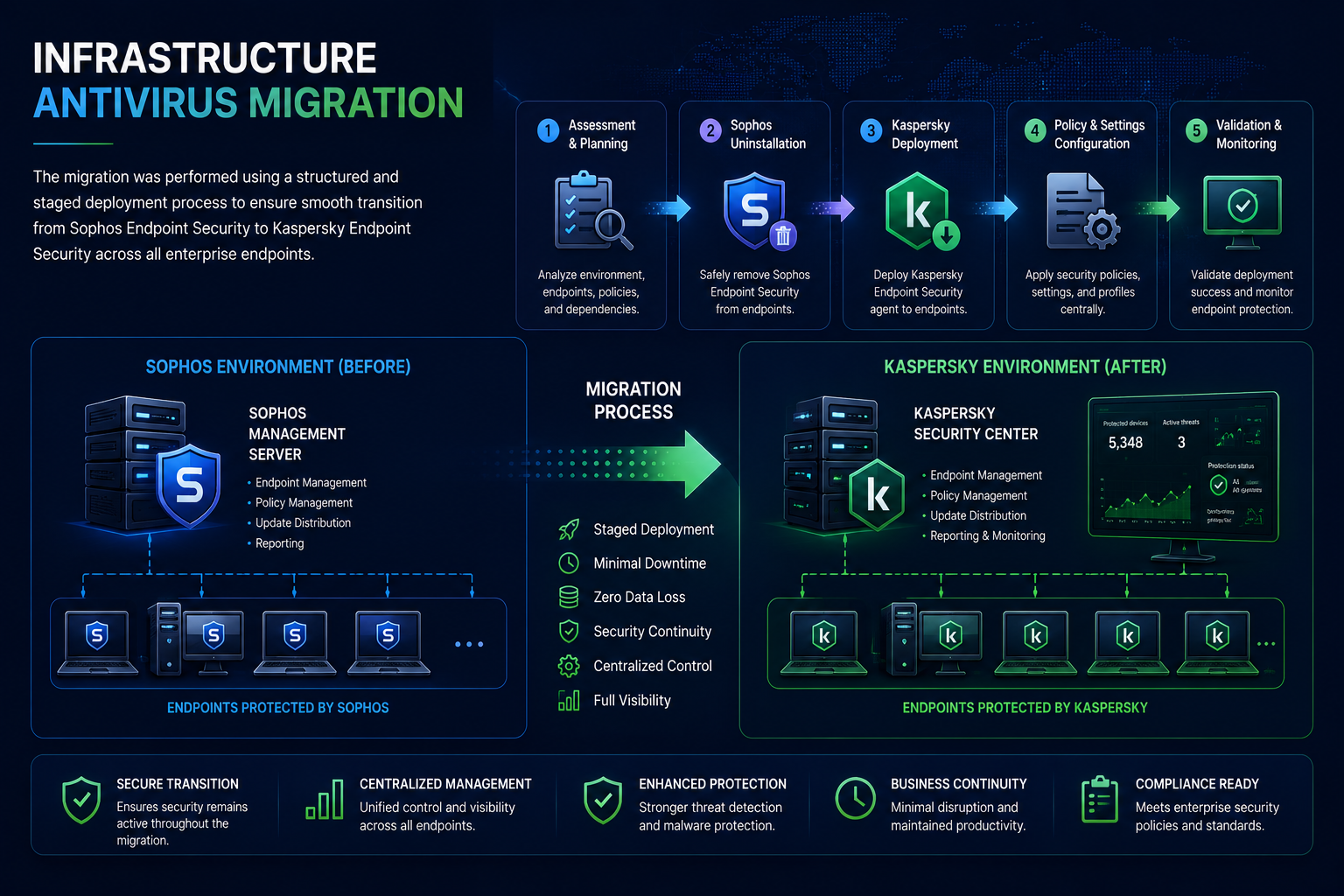
Infrastructure migration activities focused on replacing Sophos endpoint agents with Kaspersky Endpoint Security across enterprise endpoint environments while maintaining endpoint protection availability.
Migration execution included endpoint inventory validation, antivirus uninstallation, Kaspersky agent deployment, centralized management integration, and endpoint operational verification.
Endpoint Validation
Validated endpoint readiness, operating system compatibility, and enterprise connectivity before migration execution.
Sophos Agent Removal
Removed existing Sophos agents carefully to avoid endpoint conflicts and service interruptions.
Kaspersky Deployment
Deployed Kaspersky Endpoint Security agents gradually using centralized deployment methodology.
Monitoring & Validation
Monitored deployment health, endpoint communication, update synchronization, and protection status.
Endpoint Security & Policy
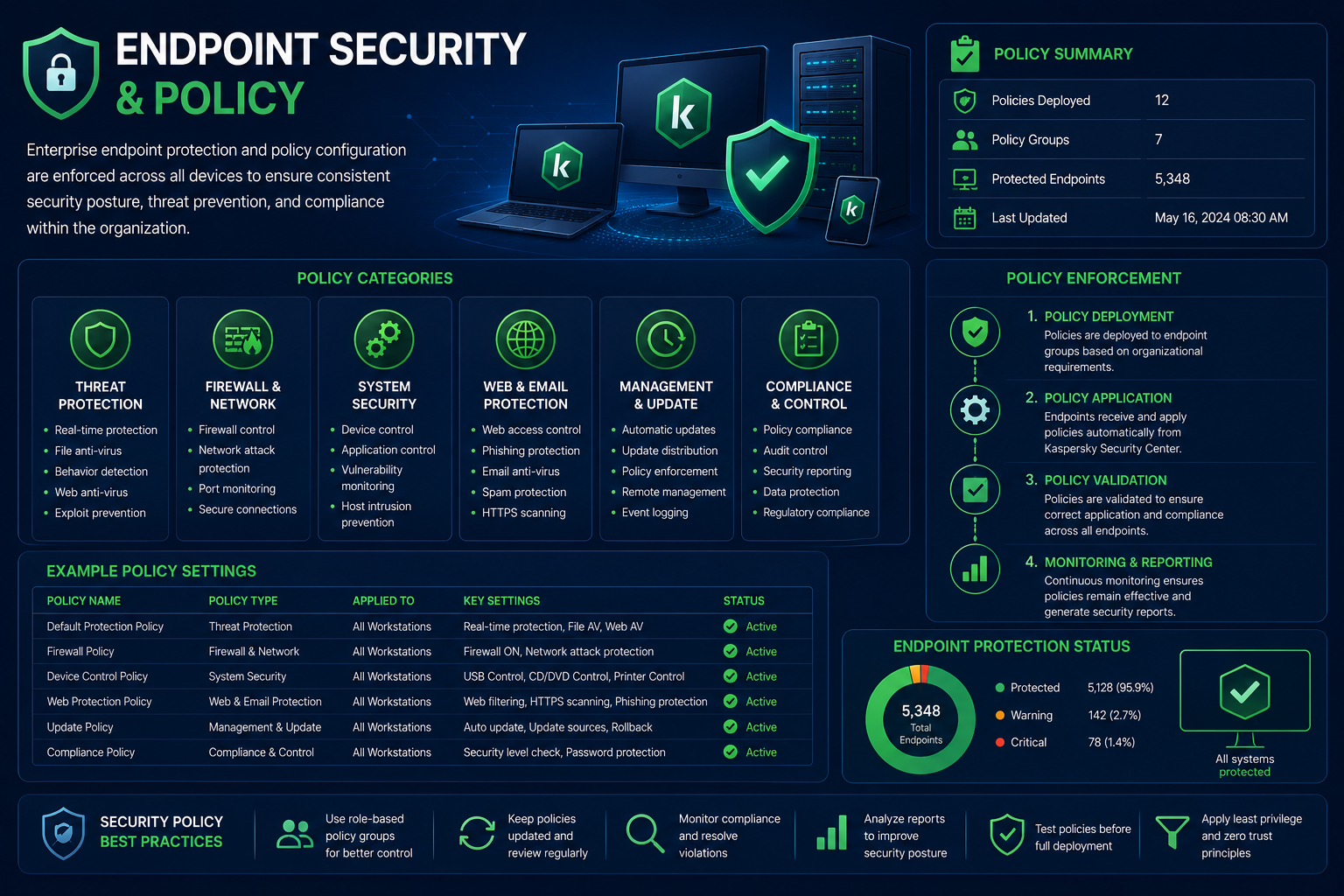
Enterprise endpoint security policies were configured and synchronized to ensure all endpoints complied with organizational security standards after migration completion.
Real-Time Protection
Configured malware protection, behavioral analysis, and ransomware prevention policies.
Update Synchronization
Validated antivirus signature updates and centralized update repository synchronization.
Security Enforcement
Applied enterprise endpoint protection policies to maintain compliance and access security.
Endpoint Monitoring
Monitored endpoint protection status, malware events, and security compliance centrally.
Solutions
The migration was completed successfully using staged deployment methodology, pilot testing, rollback preparation, and centralized monitoring to minimize operational risks.
Staged Deployment
Endpoint migration activities were executed gradually to reduce operational impact.
Pilot Testing
Initial deployment validation was conducted before full rollout execution.
Rollback Planning
Rollback procedures were prepared to maintain business continuity.
Post-Migration Validation
Endpoint protection, policy enforcement, and centralized monitoring were validated successfully.